How a steel box changed the world economy
Before containers, loading a ship could take days of manual work. A standard box turned global trade into something closer to a conveyor belt.
The short version
- Malcom McLean’s Ideal X carried containers from New Jersey to Houston in 1956.
- Standard container sizes let ships, trains and trucks share the same boxes.
- Cheaper shipping made long, global supply chains possible.
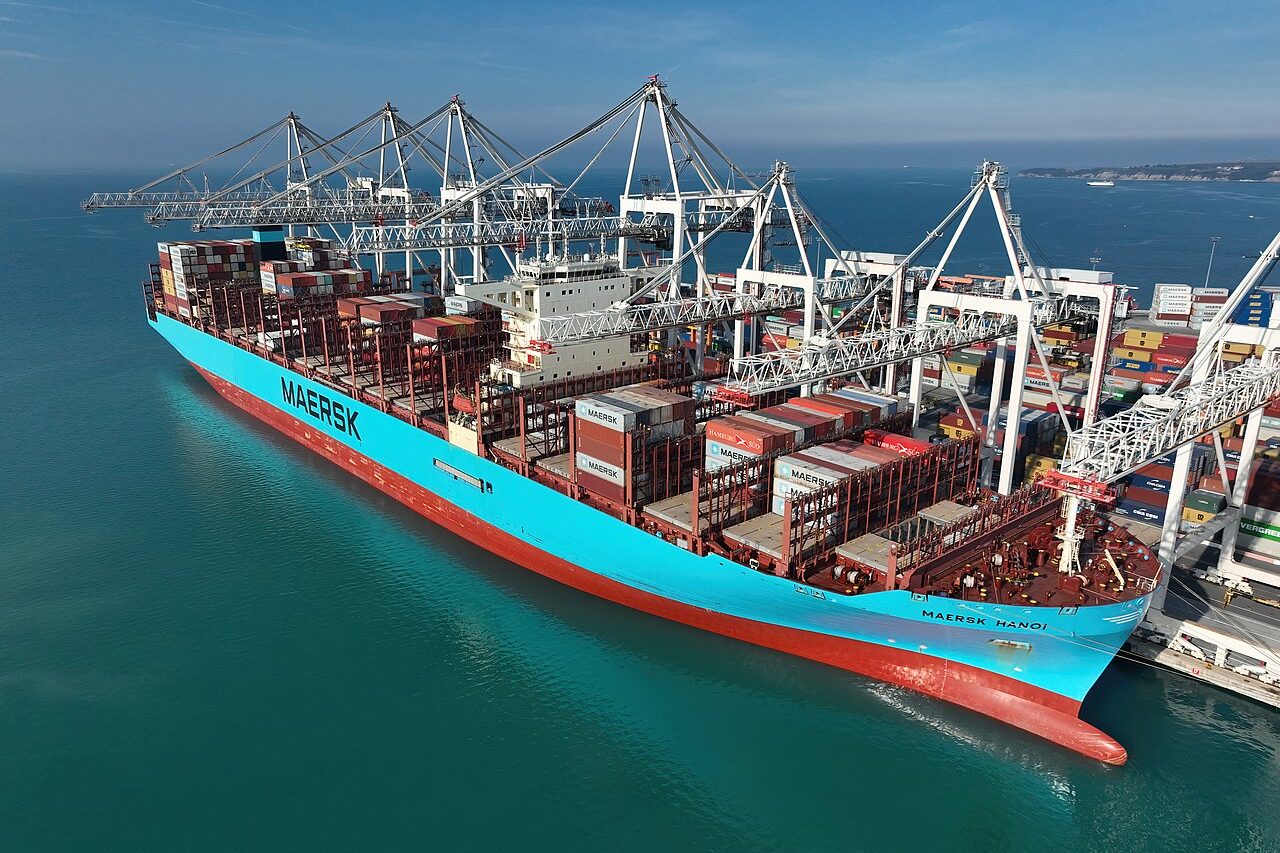
- The largest container ships today carry more than 20,000 twenty-foot boxes.
For most of history, cargo was loaded one sack, barrel or crate at a time. Dock workers carried goods on and off ships by hand, a slow and expensive process known as break-bulk shipping. A ship could spend as long in port as at sea.
Each item had to be counted, lifted, stowed and secured, then unloaded and checked again at the other end. Goods were often moved several times between warehouse, quay and hold. Breakages were common, and so was theft. The cost of getting cargo through a port could be a large share of the cost of the whole journey.
The idea
American trucking entrepreneur Malcom McLean wanted a faster way. In 1956 his converted tanker, the Ideal X, sailed from Newark, New Jersey, to Houston, Texas, carrying 58 metal containers on its deck. Each box could be lifted straight from a truck onto the ship and off again at the other end.
McLean was not the first person to put cargo in boxes. Railways and shipping lines had experimented with various kinds of containers before. What set his approach apart was treating the ship, the port, the crane and the truck as parts of a single system designed around the box, rather than fitting a box into a system built for loose cargo. His company, which became known as Sea-Land, went on to build ships designed specifically to carry containers.
How the system works
Think of a single container of goods travelling from a factory to a shop:
- Packing. The container is loaded and sealed at or near the factory.
- Road or rail. It travels to a port on a truck chassis or a rail wagon, without being opened.
- Loading. At the terminal, large cranes lift it onto a ship, where it is stacked in a planned position and locked to the boxes around it with standard corner fittings.
- The voyage. The ship may call at several ports, with cranes removing and adding containers at each one.
- Onward travel. At the destination, the box is lifted onto another truck or train and carried inland, still sealed.
At no point does anyone need to handle the goods inside. That is the whole trick.
Standard sizes
Containers only transformed trade once their sizes and fittings were standardised internationally. In the 1960s, industry groups and standards bodies, including the International Organization for Standardization, worked through often contentious negotiations over dimensions, strength and corner fittings. A standard box can move from ship to train to truck without being unpacked, and cranes, ports and vessels can all be designed around it.
Today capacity is often measured in TEU, or twenty-foot equivalent units. A common forty-foot container counts as two TEU. The first container ships carried a few hundred boxes; the largest vessels today can carry more than 20,000 TEU.
The effects
- Lower costs. Handling became faster and cheaper, and theft and damage fell because goods stayed sealed.
- Bigger ships, fewer ports. Trade concentrated in large, highly mechanised container ports.
- Global supply chains. Cheap, reliable shipping made it practical to make parts in one country and assemble them in another.
- Changing docks. Far fewer dock workers were needed, which reshaped port cities.
The last point deserves more than a line. In many cities, traditional docks close to the centre declined because they lacked the space, deep water or road and rail links that container terminals needed. New terminals were built elsewhere, sometimes in different towns entirely. Dockside jobs that had supported whole neighbourhoods disappeared, and dock workers’ unions fought long battles over the pace of change. Many old waterfronts were later redeveloped into offices, homes and leisure areas.
Common misconceptions
- “The container was a clever invention.” The box itself is simple. The hard part was standardisation, and building ports, ships, cranes and paperwork that all worked together.
- “Globalisation was mostly about trade deals.” Trade agreements mattered, but so did the falling cost of moving things. The two worked together.
- “Shipping is cheap, so distance no longer matters.” Transport costs fell sharply, but time, reliability and the risk of disruption still shape where companies make things.
What it means for you
Much of what is in a typical home, from clothes and electronics to furniture and toys, will have spent part of its life in a steel box. The low cost of moving those goods across oceans is one reason many manufactured products became cheaper relative to incomes over recent decades.
What is still uncertain
The system’s efficiency also makes it fragile. In March 2021, the giant container ship Ever Given ran aground in the Suez Canal and blocked it for about six days, holding up hundreds of vessels. During the Covid-19 pandemic, sudden swings in demand, port closures and shortages of empty containers in the right places caused long delays and sharp rises in freight rates. Those episodes prompted debate about whether companies had stretched supply chains too thin, and how far they should move production closer to home. How much that debate will actually change trade patterns is still unclear.
Economic historian Marc Levinson’s book The Box tells the story in detail and argues that the container did as much to drive globalisation as any trade agreement.
Test yourself
3 quick questions on what you just read. Your answers stay on your device.
Sources and further reading
We check our facts after publication too. If you spot an error, please tell us. Any correction will be noted here, as set out in our corrections policy.