How vaccines train your immune system
A vaccine gives your body a safe preview of a germ, so it can respond faster if the real thing arrives. Different vaccines deliver that preview in different ways.
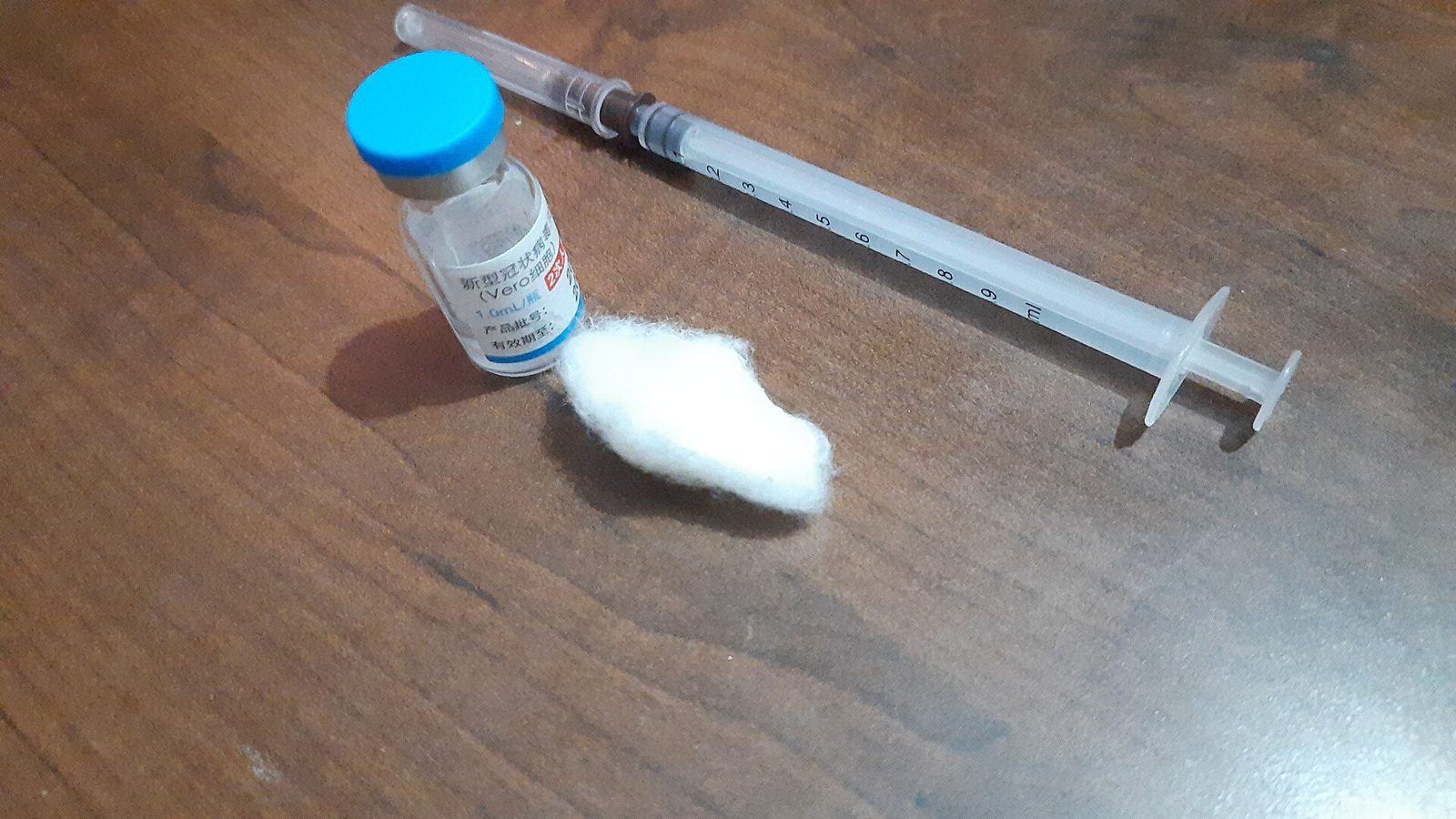
The short version
- Vaccines teach the immune system to recognise a specific germ.
- Memory cells allow a faster, stronger response to later infection.
- mRNA vaccines give cells instructions to make a harmless protein.
- Smallpox, once a major killer, was declared eradicated in 1980 after a global vaccination campaign.
Your immune system learns from experience. The first time it meets a new virus or bacterium, it can take days to mount a strong response, and in that time you can become seriously ill. Vaccines provide the experience without the disease.
Where vaccines came from
In 1796 the English doctor Edward Jenner tested a long-observed piece of country knowledge: people who had caught cowpox, a mild disease, seemed protected from smallpox. He deliberately exposed a boy to cowpox and later showed that he did not develop smallpox. The word vaccine comes from the Latin for cow.
Over the following two centuries, scientists developed vaccines against diseases including rabies, diphtheria, tetanus, polio and measles. The greatest success came in 1980, when the World Health Assembly declared smallpox eradicated after a worldwide vaccination campaign. It remains the only human disease to have been wiped out.
What the immune system learns
Germs carry distinctive molecules, called antigens, on their surface. When the immune system meets an antigen, it produces antibodies that can latch onto it, and immune cells that can destroy infected cells. Crucially, it also keeps memory cells. If the same antigen turns up again, those memory cells allow a much faster and stronger response.
In outline, the process after a vaccination looks like this:
- Presentation. Specialised immune cells pick up the vaccine’s antigen and display it to other immune cells.
- Selection. Among the body’s enormous variety of immune cells, the few that happen to recognise this antigen are activated and multiply.
- Response. B cells produce antibodies that fit the antigen, and T cells help coordinate the response and can kill infected cells.
- Memory. Once the response dies down, a population of long-lived memory cells remains, ready to act quickly if the real germ appears.
That first response is often why people feel a little unwell for a day or two after some vaccines: a sore arm, tiredness or a mild fever are signs of the immune system at work.
Different ways to show the antigen
- Inactivated vaccines use a germ that has been killed.
- Live attenuated vaccines use a weakened form that does not cause illness in healthy people.
- Subunit vaccines use only a piece of the germ, such as a protein.
- mRNA vaccines deliver genetic instructions that tell your own cells to make a harmless piece of the germ, usually a surface protein. The mRNA breaks down naturally within days and does not enter the cell nucleus or change your DNA.
Some vaccines also contain an adjuvant, an ingredient that helps provoke a stronger immune response, so less antigen is needed.
The mRNA approach was studied for decades before the first mRNA vaccines were authorised for Covid-19 in late 2020. Katalin Karikó and Drew Weissman shared the 2023 Nobel Prize in Physiology or Medicine for discoveries that made those vaccines possible.
How vaccines are tested
Before a vaccine is approved, it normally goes through laboratory work and then clinical trials in people, in phases of increasing size that check safety, the right dose and how well it protects. Independent regulators review the evidence. Monitoring continues after approval, because very rare side effects may only show up once millions of people have been vaccinated.
Why some vaccines need boosters
Protection from some vaccines fades over time, and some germs change. Booster doses remind the immune system, and updated vaccines can target newer versions of a virus. Influenza vaccines, for instance, are reformulated regularly because flu viruses keep changing.
Protecting others
When enough people in a community are immune, a disease struggles to spread, which protects people who cannot be vaccinated, such as very young babies or those with certain medical conditions. This is often called community or herd immunity. The share of people who need to be immune depends on how contagious the disease is. For measles, one of the most contagious diseases known, it is very high.
Common misconceptions
- “A vaccine can give you the disease.” Inactivated, subunit and mRNA vaccines contain no live germ, so they cannot cause the infection. Live attenuated vaccines are weakened so that they do not cause illness in healthy people, which is why they are not recommended for some people with weakened immune systems.
- “Vaccines cause autism.” This claim traces back to a 1998 study that was later retracted. Many large studies since have found no link.
- “Natural infection is always better.” Infection can produce strong immunity, but it carries the risks of the disease itself, which vaccination is designed to avoid.
What is still uncertain
There is still no widely available vaccine for some major diseases, such as HIV, despite decades of effort. Malaria vaccines have only recently been recommended for wider use by the World Health Organization. Researchers are also working on vaccines that give longer-lasting protection and that cover many strains of fast-changing viruses at once.
This article is general information, not medical advice. For advice about your own vaccinations, talk to a doctor, pharmacist or your national health service.
Test yourself
3 quick questions on what you just read. Your answers stay on your device.
Sources and further reading
We check our facts after publication too. If you spot an error, please tell us. Any correction will be noted here, as set out in our corrections policy.