The world speaks about 7,000 languages. Many are at risk
A small number of languages dominate, while thousands are spoken by small communities. Here is what linguists track, and why it matters.
The short version
- Reference catalogues list a little over 7,000 living languages.
- A small group of large languages accounts for most speakers.
- Many languages have few speakers and are classed as endangered.
- The key sign of danger is whether children are still learning a language at home.
Counting languages is harder than it sounds. Linguists have to decide where a dialect ends and a separate language begins, and new fieldwork changes the picture. Even so, the main reference catalogues agree on the rough scale: a little over 7,000 living languages.
Language or dialect?
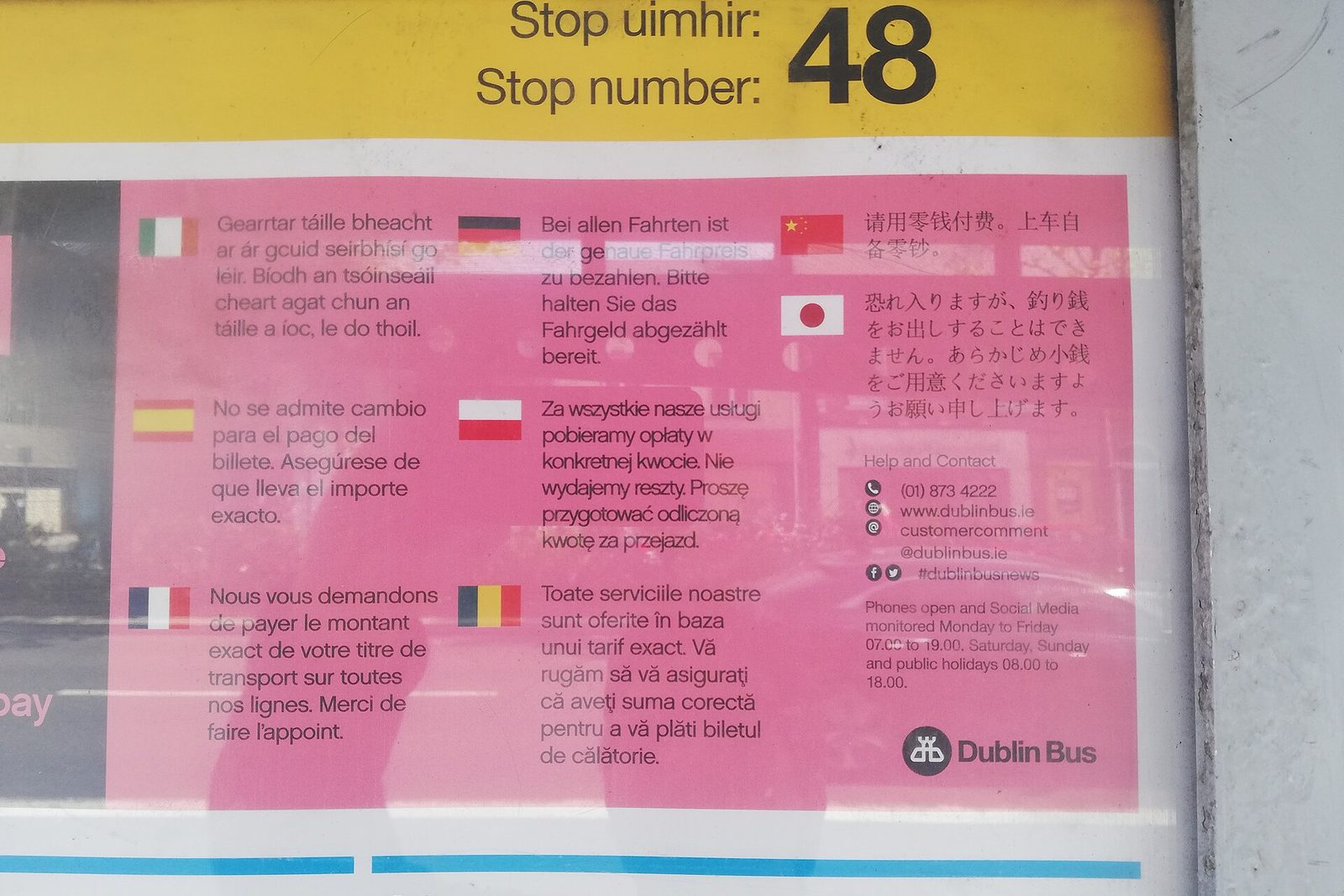
There is no purely scientific line between a language and a dialect. Linguists often ask whether speakers can understand one another, but that test produces awkward results. Speakers of Danish, Norwegian and Swedish can often follow each other reasonably well, yet these are counted as separate languages. Meanwhile, varieties grouped under a single name, such as Arabic or Chinese, can be very hard for speakers of different varieties to understand in spoken form.
In practice, history, politics and a sense of identity play a large part. Whether a variety has its own standard spelling, its own schools and its own national status often shapes how it is labelled. That is why catalogues sometimes disagree, and why the total moves a little from edition to edition.
Sign languages are full languages too, with their own grammar, and they are included in the main catalogues. Many countries have their own, and they are not simply signed versions of the spoken language around them.
A very uneven distribution
Those languages are not shared out evenly. A small group of very large languages, such as English, Mandarin Chinese, Hindi and Spanish, is spoken by a large share of the world’s population, counting both first and second language speakers. At the other end, thousands of languages have only a few thousand speakers, or fewer.
Some regions are especially diverse. Papua New Guinea alone is home to several hundred languages. Large parts of sub-Saharan Africa, South and Southeast Asia and the Pacific are also very rich in languages, while Europe, by comparison, has relatively few.
How linguists measure danger
The number of speakers matters, but it is not the most important measure. A language with a few thousand speakers can be stable if children grow up speaking it, while one with far more speakers can be in trouble if young people have stopped using it.
UNESCO uses a scale that runs roughly like this:
- Safe: spoken by all generations, and passed on without interruption.
- Vulnerable: most children speak it, but perhaps only in certain settings, such as the home.
- Definitely endangered: children no longer learn it as a mother tongue at home.
- Severely endangered: spoken mainly by grandparents and older generations.
- Critically endangered: the youngest speakers are elderly and use it rarely.
- Extinct: no speakers remain.
Why languages disappear
A language is endangered when children are no longer learning it at home. That usually happens gradually, as families switch to a language that offers more access to schooling, jobs or media. When the last fluent speakers die, a language may survive only in recordings, or not at all.
History has often sped this process up. In many countries, Indigenous children were once punished for speaking their own languages at school, and the effects of those policies can last for generations.
Common misconceptions
- No language is primitive. Every language studied has a complex grammar capable of expressing anything its speakers need. A small language is not a simple one.
- Bilingualism does not confuse children. Children around the world grow up with two or more languages as a matter of course.
- Loss is not inevitable. Languages that have declined sharply have been strengthened when communities, schools and governments work together.
What is being done
- Documentation. Linguists record speakers, write grammars and build dictionaries.
- Teaching. Some communities run language nests and school programmes so children learn the language early.
- Technology. Keyboards, spell checkers and online content can make a small language easier to use every day.
There are well-known examples of revival. Hebrew, for centuries used mainly in religious and written contexts, became an everyday spoken language again from the late 19th century and is now the main language of Israel. In New Zealand, Māori-language preschools known as Kōhanga Reo, begun in the early 1980s, became a model copied elsewhere, including for Hawaiian. Welsh is now taught to children throughout Wales, and Welsh-medium schools are an ordinary choice for many families.
UNESCO declared 2022 to 2032 the International Decade of Indigenous Languages to draw attention to this work.
What it means for you
For most readers, the loss of a distant language can seem abstract. But each language holds its own vocabulary for local plants, animals, landscapes and history, along with stories and songs that may not exist anywhere else. When a language is no longer spoken, some of that knowledge goes with it.
If you speak a heritage language in your own family, using it with children is the single most effective thing anyone can do to keep it alive.
What is still uncertain
Nobody knows precisely how many languages will still be spoken by the end of this century. Estimates of future loss vary widely, because they depend on choices not yet made by families, communities and governments. The counts themselves will also keep changing as linguists describe languages more fully and refine where one ends and another begins.
Test yourself
3 quick questions on what you just read. Your answers stay on your device.
Sources and further reading
We check our facts after publication too. If you spot an error, please tell us. Any correction will be noted here, as set out in our corrections policy.