Why two narrow canals hold up a large share of world trade
The Suez and Panama canals save ships weeks at sea. When either one is disrupted, the effects reach supermarket shelves thousands of miles away.
The short version
- The Suez Canal links the Mediterranean and the Red Sea; it opened in 1869.
- The Panama Canal links the Atlantic and Pacific; it opened in 1914.
- Disruption forces long detours, raising shipping times and costs.
- Suez has no locks; Panama lifts ships with locks fed by fresh water.
Most goods that cross oceans travel by container ship, and ships take the shortest safe route they can. Two man-made shortcuts sit on some of the busiest of those routes. Understanding how they work, and what happens when they stop working, explains a surprising amount about the price and availability of everyday goods.
The Suez Canal
The Suez Canal in Egypt opened in 1869 and connects the Mediterranean Sea with the Red Sea. For a ship sailing between Asia and Europe, it removes the need to go all the way around Africa via the Cape of Good Hope, a detour that adds thousands of nautical miles.
The canal has no locks, because the two seas sit at roughly the same level. That allows very large ships to pass, in convoys, along a channel that is still narrow enough for one accident to matter.
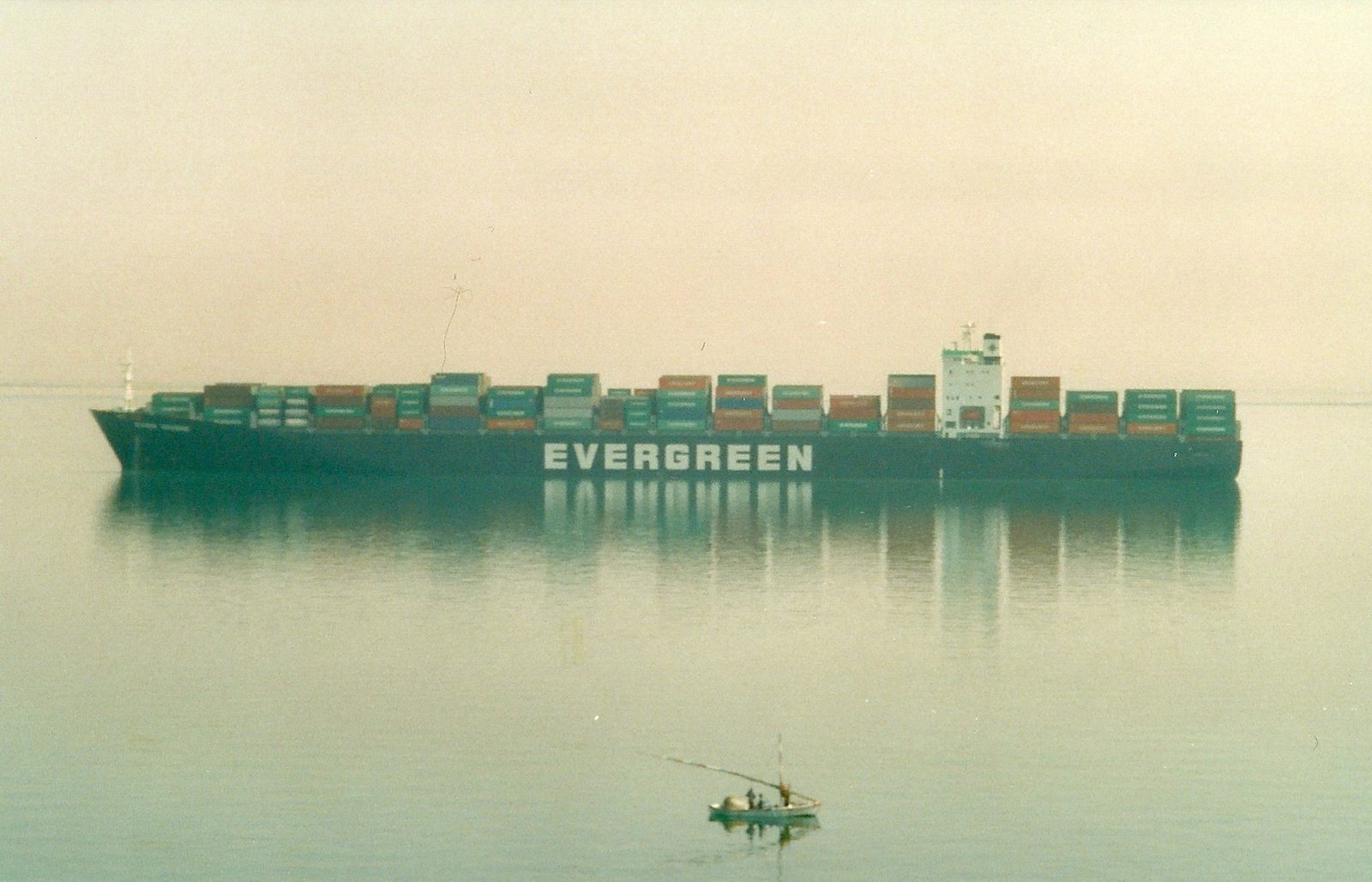
In March 2021 the container ship Ever Given ran aground across the canal and blocked it for six days. Hundreds of ships queued at either end, and the episode became a vivid lesson in how concentrated global supply chains are.
A history shaped by politics
The canal was built by a company led by the French diplomat Ferdinand de Lesseps, and for decades it was controlled by foreign shareholders, with Britain becoming a major owner. In 1956 Egypt’s president, Gamal Abdel Nasser, nationalised it, prompting an invasion by Britain, France and Israel that ended under heavy international pressure. That episode, the Suez Crisis, is often seen as a marker of Britain’s declining role as a world power.
The canal was closed again after the 1967 Arab-Israeli war and did not reopen until 1975, leaving ships stranded inside it for years. Egypt has since widened and deepened it, and in 2015 opened a new parallel channel along part of its length to allow two-way traffic there. Today it is run by the Suez Canal Authority, and the tolls it collects are an important source of foreign currency for Egypt.
The Panama Canal
The Panama Canal opened in 1914 and links the Atlantic and Pacific oceans across the Isthmus of Panama. Unlike Suez, it uses a system of locks that lift ships up to an artificial lake, Gatún Lake, and down again on the other side.
Every ship that passes uses large amounts of fresh water from the lake system. That makes the canal sensitive to rainfall: in dry periods, the canal authority can limit the number of daily crossings or how deeply loaded ships may be. A severe drought in 2023 led to exactly those restrictions, and long queues of ships formed at both ends.
How Panama was built
A French company, again led by de Lesseps, tried first in the 1880s and failed, defeated by tropical disease, landslides and financial collapse. The United States took over the project in the early 1900s, after Panama separated from Colombia, and completed it with a lock design rather than a sea-level channel. Controlling mosquito-borne diseases such as yellow fever and malaria was central to its success.
The United States ran the canal for most of the 20th century. Under treaties signed in 1977, control passed fully to Panama at the end of 1999. In 2016 a larger set of locks opened, allowing bigger ships, often called Neopanamax vessels, to use the route.
How a crossing works
The two canals feel very different from the bridge of a ship.
- A vessel books a slot, or waits at anchorage for its turn.
- A local pilot comes aboard, because canal transits require specialist knowledge.
- At Suez, ships move in scheduled convoys along the channel and pass each other in wider sections and lakes.
- At Panama, ships are guided into lock chambers, which are flooded or drained to raise or lower them, step by step.
- Tolls are charged according to the ship’s type and size, and what it is carrying.
Common misconceptions
- A closed canal does not stop trade. It reroutes it. Goods still arrive, but later and at greater cost.
- Effects are rarely instant. Shipping contracts, stockpiles and schedules mean higher costs can take weeks or months to show up in shop prices, if they do at all.
- The canals are not the only chokepoints. Natural straits, such as the Strait of Hormuz and the Strait of Malacca, matter just as much for oil and other cargo.
The Red Sea disruption
From late 2023, attacks on commercial ships in and around the Red Sea led many shipping lines to avoid the Suez route and sail around southern Africa instead. The detour lengthened voyages between Asia and Europe by days, tied up more ships and raised freight costs. It showed that a canal can be disrupted without being physically blocked: if the approaches are unsafe, ships stay away.
Why it matters to you
- Delays move through supply chains. A ship that arrives late misses its slot at the next port, and the delay ripples on.
- Detours cost money. Longer routes burn more fuel and tie up ships for longer, which can raise freight rates.
- Few alternatives exist. Rail and air can carry some goods, but not at the volume or price of sea freight.
What is still uncertain
Two long-term questions hang over the canals. For Panama, it is whether rainfall patterns will provide enough water as demand grows, and what new reservoirs or water projects might be needed. For Suez, it is how security in the surrounding region evolves, which no engineering work can fix.
Next time a canal is in the news, the useful questions are how long the disruption is expected to last, and how far the alternative route adds to the journey.
Test yourself
3 quick questions on what you just read. Your answers stay on your device.
Sources and further reading
We check our facts after publication too. If you spot an error, please tell us. Any correction will be noted here, as set out in our corrections policy.